
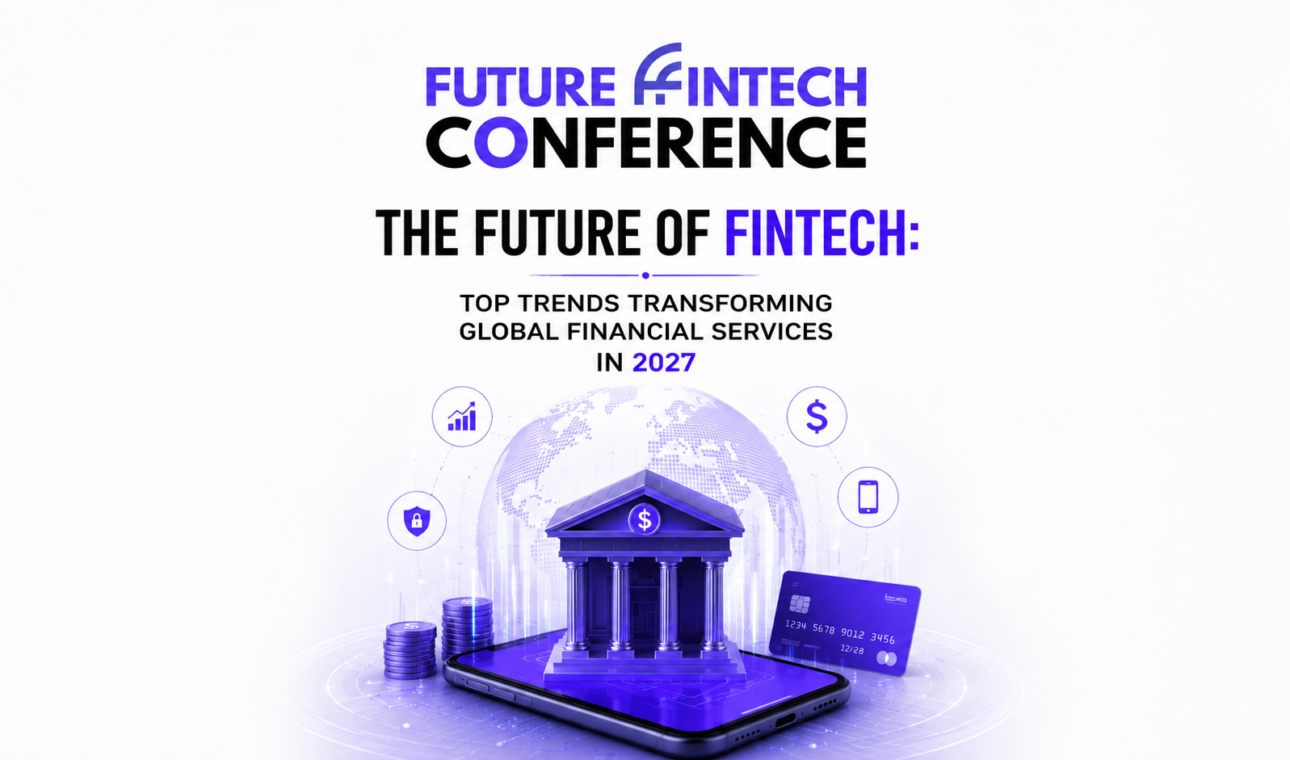
The financial services industry is undergoing one of the most significant transformations in its history. Rapid advances in artificial intelligence, digital payments, blockchain, cloud computing, and open banking are redefining how individuals and businesses manage, move, and invest money. As we move through 2027, FinTech is no longer simply disrupting traditional banking—it is becoming the foundation of the global financial ecosystem.
Financial institutions, startups, regulators, and technology providers are working together to build a future where financial services are faster, more secure, highly personalized, and accessible to everyone. From AI-powered banking assistants to real-time cross-border payments, the next generation of financial innovation is creating new opportunities for businesses and consumers alike.
Here are the key trends shaping the future of FinTech in 2027.
1. Artificial Intelligence Becomes the Core of Financial Services
Artificial intelligence has evolved from an emerging technology into a strategic business necessity. Financial institutions are leveraging AI across virtually every aspect of their operations, including fraud detection, customer service, underwriting, investment management, and regulatory compliance.
Modern AI systems can analyze millions of transactions in real time, identify suspicious activities within seconds, and continuously learn from new patterns to improve security. AI-powered chatbots and virtual financial advisors are providing customers with personalized financial guidance 24/7, while generative AI is helping institutions automate documentation, reporting, and customer communications.
Banks and FinTech companies are increasingly using predictive analytics to anticipate customer needs, improve lending decisions, and offer customized financial products based on individual behavior and preferences.
2. Embedded Finance Becomes the New Standard
One of the fastest-growing trends in FinTech is embedded finance—the seamless integration of financial services into non-financial platforms.
Consumers can now access loans while shopping online, purchase insurance during travel bookings, or make instant payments within social media platforms. Businesses are embedding payment processing, financing, and banking services directly into their products, creating smoother customer experiences and generating new revenue streams.
Rather than visiting a bank, customers increasingly interact with financial services wherever they already spend their time.
3. Open Banking Accelerates Financial Innovation
Open Banking continues to transform how financial data is shared and utilized. Through secure APIs, customers can safely authorize financial institutions to share account information with approved third-party providers.
This has enabled a new generation of financial applications that offer budgeting tools, investment platforms, lending solutions, and personalized financial advice—all while giving consumers greater control over their financial data.
Open Banking also encourages greater competition within the financial sector, driving innovation and improving customer experiences through more personalized and transparent services.
4. Digital Payments Continue Their Global Expansion
Cashless transactions are becoming the preferred payment method worldwide. Contactless cards, mobile wallets, QR-code payments, and instant payment networks are rapidly replacing traditional payment methods.
Businesses are investing heavily in payment technologies that provide faster settlement, lower transaction costs, enhanced security, and seamless international transactions.
Cross-border payments, traditionally slow and expensive, are becoming significantly more efficient through new payment infrastructures and real-time settlement networks. Consumers increasingly expect instant payments regardless of geography.
5. AI-Driven Fraud Prevention and Cybersecurity
As digital financial services expand, so do cybersecurity risks. Financial institutions are responding by deploying advanced AI-powered fraud detection systems capable of identifying suspicious behavior before financial losses occur.
Machine learning algorithms continuously monitor transaction patterns, customer behavior, device activity, and login locations to detect anomalies in real time.
Combined with biometric authentication, behavioral analytics, and multi-factor security protocols, these technologies significantly strengthen customer protection while reducing friction during legitimate transactions.
6. Regulatory Technology (RegTech) Simplifies Compliance
Financial regulations continue to grow in complexity, creating significant compliance challenges for banks and FinTech companies.
RegTech solutions leverage automation, artificial intelligence, and machine learning to simplify compliance processes such as Know Your Customer (KYC), Anti-Money Laundering (AML), transaction monitoring, and regulatory reporting.
By automating repetitive compliance activities, organizations reduce operational costs, minimize human error, and improve regulatory transparency while allowing compliance teams to focus on higher-value strategic work.
7. Sustainable Finance Gains Momentum
Environmental, Social, and Governance (ESG) considerations are becoming increasingly important within financial services.
Investors are demanding greater transparency around sustainable investments, while financial institutions are introducing green financing products, carbon tracking solutions, and ESG-focused investment portfolios.
FinTech companies are developing platforms that enable customers to monitor the environmental impact of their spending, invest responsibly, and support sustainable business initiatives through technology-driven financial products.
8. Banking-as-a-Service (BaaS) Continues to Expand
Banking-as-a-Service enables companies outside the traditional banking industry to offer financial products using licensed banking infrastructure.
Technology companies, retailers, healthcare providers, and digital platforms can now integrate banking capabilities such as accounts, payments, lending, and cards into their own services without becoming banks themselves.
This model is creating entirely new business opportunities while increasing financial inclusion and expanding customer access to innovative financial services.
9. Financial Inclusion Through Digital Innovation
FinTech continues to play a critical role in expanding access to financial services across underserved communities.
Mobile banking, digital identity verification, alternative credit scoring, and low-cost payment solutions are helping millions of individuals and small businesses participate in the global economy.
Cloud-based financial platforms enable financial institutions to serve remote regions efficiently while reducing infrastructure costs and improving accessibility for previously unbanked populations.
10. Human-Centered Innovation Defines the Next Generation of FinTech
While technology remains the primary driver of innovation, the future of FinTech is increasingly focused on people.
Organizations are recognizing that successful digital transformation requires balancing technological advancement with trust, transparency, ethics, and customer experience.
Responsible AI, explainable algorithms, data privacy, and customer-centric product design are becoming essential competitive advantages. Financial institutions that prioritize human-centered innovation will be best positioned to build lasting customer relationships and long-term business success.
The Road Ahead
The future of financial services will not be defined by technology alone but by how effectively organizations combine innovation with trust, security, and customer value.
Artificial intelligence, embedded finance, open banking, digital payments, RegTech, and sustainable finance are creating an ecosystem where financial services become more intelligent, connected, and accessible than ever before.
For financial institutions, embracing these technologies is no longer optional—it is essential for maintaining competitiveness in an increasingly digital economy. Organizations that invest in scalable infrastructure, responsible AI, cybersecurity, and customer-centric innovation will lead the next wave of financial transformation.
Conclusion
The FinTech industry is entering a new era where technology serves as the foundation for smarter, faster, and more inclusive financial services. As innovation accelerates, collaboration between financial institutions, technology providers, regulators, and entrepreneurs will be critical in shaping a resilient and sustainable financial ecosystem.
Events such as the Future FinTech Awards & Conference play an important role in bringing together industry leaders, innovators, investors, and policymakers to exchange ideas, recognize excellence, and accelerate the adoption of transformative financial technologies. By fostering collaboration and celebrating innovation, the conference helps shape the future of global finance and inspires the next generation of FinTech leaders.
The future of FinTech is already here and organizations that embrace innovation today will define the financial landscape of tomorrow.