
Future Fintech Awards & Conference

Transitioning to Quantum-Resilient Encryption: How Financial Institutions Are Preparing Ledger Systems for Post-Quantum Cryptography

The Impending Cryptographic Shift in Financial Infrastructure The foundation of global financial services is built on trust, which is mathematically guaranteed by cryptography. Every transaction, asset transfer, clearing action, and digital signature relies on asymmetric public-key cryptography—specifically algorithms like RSA, Diffie-Hellman, and Elliptic Curve Cryptography (ECC). These algorithms secure everything from core banking databases and […]

Securing the Embedded Finance Ecosystem: How Financial Institutions Are Mitigating API Vulnerabilities in Third-Party Networks

Introduction The rise of embedded finance is fundamentally redefining how non-financial platforms monetise services and engage users. By integrating payments, lending, insurance, and banking services directly into e-commerce, SaaS, and ride-hailing applications, brands can offer seamless customer journeys that drive significant operational value. However, this shift has decentralised the financial ecosystem. The traditional “castle-and-moat” security […]

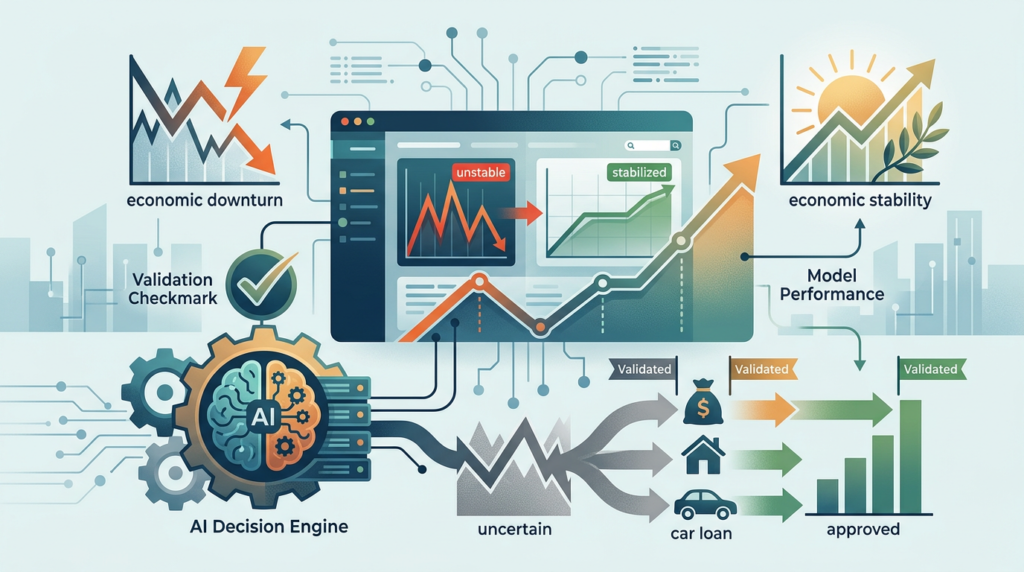
Mitigating Model Drift in Automated Lending: Best Practices for Validating AI Decisioning Engines Under Volatile Economic Cycles

The transition from manual underwriting to automated, artificial intelligence (AI) and machine learning (ML) decisioning has transformed the economics of retail and commercial lending. Automated pipelines process applications in seconds, utilizing alternative data streams, real-time transaction mapping, and non-linear classification models to price risk at scale. Yet, the predictive power of these models is not […]

Architecting Continuous Compliance: How Multi-Jurisdictional Fintechs Are Automating Real-Time Regulatory Reporting

For years, regulatory compliance within the financial services sector operated on a historical, batch-processed cadence. Compliance teams worked back-office cycles, compiling ledger entries, cross-referencing ledger reports with transaction logs, and submitting structured XML or CSV files to regulatory hubs days, weeks, or even months after transactions had closed. In that paradigm, compliance was viewed strictly […]

The Architecture of Real-Time流动性: Orchestrating Deposit Tokens and Smart Contracts in Corporate Treasury

The Shift from Batch Processing to Continuous Treasury For decades, corporate treasury has operated under the constraints of a batch-processed financial system. Multinational corporations manage global liquidity through a fragmented patchwork of legacy rails, clearing houses, and corresponding banking networks. This infrastructure forces treasurers to rely on end-of-day balances, cut-off times, and multi-day settlement windows […]

The Evolution of Real-Time Fraud Mitigation: Scaling Machine Learning Models for Instant Payment Network Defense

The global shift toward instant payments has radically transformed the landscape of financial transactions. With networks like FedNow in the United States, SEPA Instant in Europe, Pix in Brazil, and UPI in India, clearing and settlement times have plummeted from days to milliseconds. While this velocity is a massive boon for consumer convenience and corporate […]

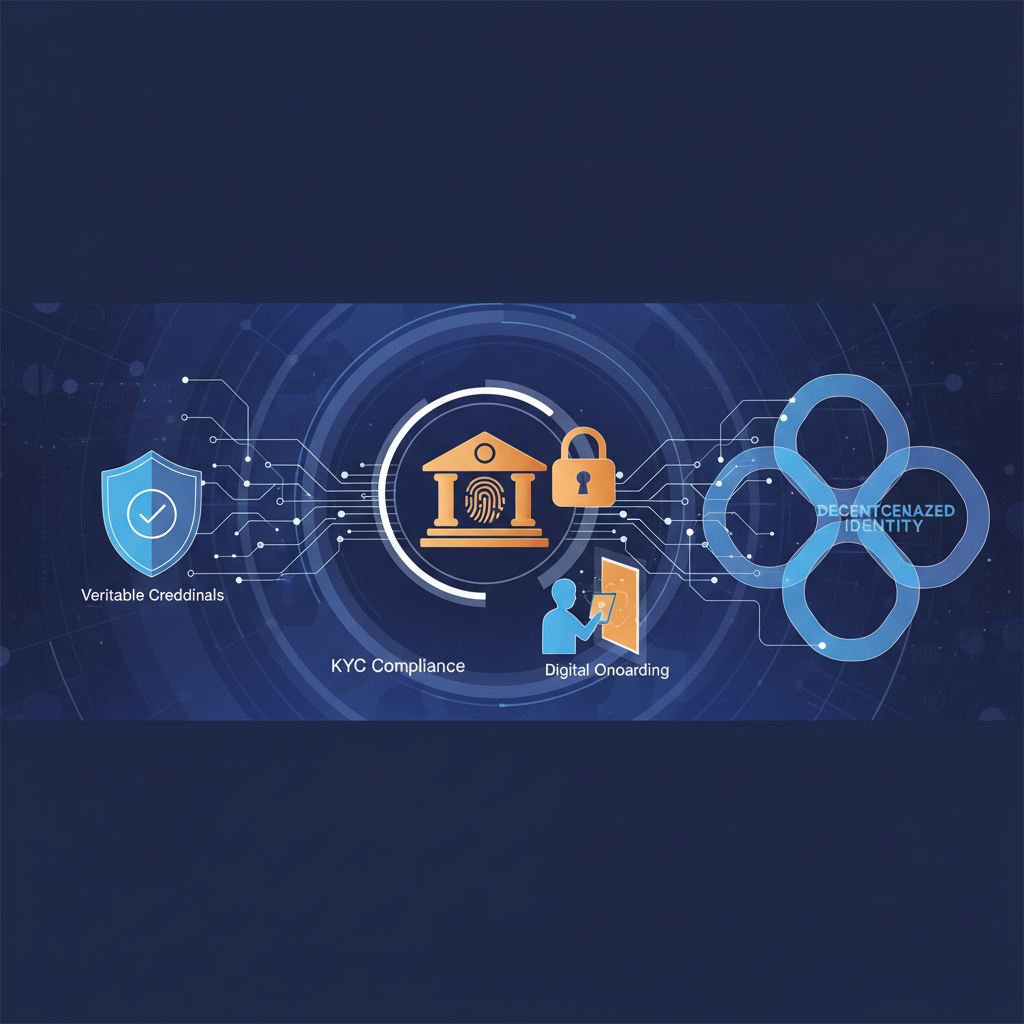
Decentralized Identity in Banking: How Verifiable Credentials Are Transforming KYC Compliance and Digital Onboarding

The digital transformation of banking has solved many customer-facing friction points, yet customer onboarding and identity verification remain stubborn pain points. For global financial institutions, Know Your Customer (KYC) and Anti-Money Laundering (AML) compliance represent a delicate balancing act. On one hand, institutions must satisfy increasingly stringent regulatory mandates to prevent financial crime. On the […]

The Tokenization of Real-World Assets: How Capital Markets Are Structuring Institutional-Grade Digital Liquidity

The Impending Transformation of Asset Plumbing Traditional capital markets operate on legacy infrastructure designed in the mid-to-late 20th century. Despite the digital appearance of modern trading interfaces, the backend mechanisms of clearing, settlement, custody, and reconciliation remain highly fragmented. Transactions suffer from settlement latencies (typically T+1 or T+2), multi-layered intermediary friction, high administrative costs, and […]

The New Guardrails of Trust: Scaling Generative AI in Financial Risk and Regulatory Compliance

The financial services industry is undergoing a profound paradigm shift driven by Generative Artificial Intelligence (GenAI). For decades, banks, fintechs, and asset managers relied on traditional machine learning models for quantitative risk modeling and fraud detection. Today, LLMs (Large Language Models) are moving beyond chat interfaces into the core architecture of financial risk management and […]

Open Banking in 2027: How APIs and Data Sharing Are Redefining Corporate Lending and Credit Automation

The manual, document-heavy workflows of corporate lending have long been a bottleneck for business growth. Historically, underwriting a mid-market enterprise or assessing a small-to-medium enterprise (SME) for a working capital loan required days—sometimes weeks—of gathering paper bank statements, audited tax filings, and manual financial modeling. Today, a fundamental shift is underway. The maturation of Open […]

shopping cart