The fintech industry is entering a new phase. For years, banks, financial institutions and startups used proof-of-concept projects to explore generative AI, blockchain and digital-asset infrastructure. By 2027, the central question will be different: can these technologies operate safely, compliantly and reliably in production?
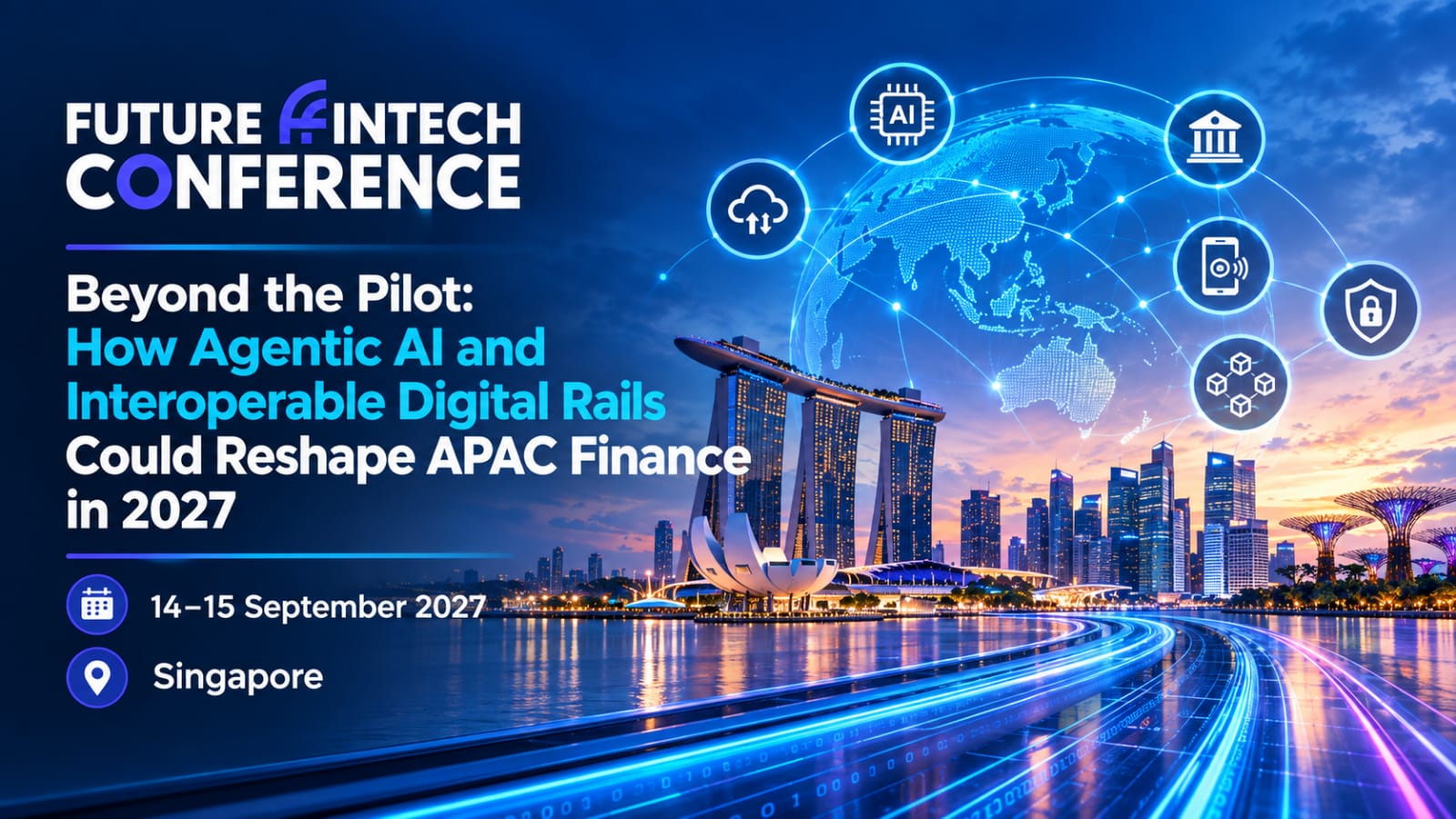
As the financial sector prepares for the Future Fintech Awards & Conference Singapore on 14–15 September 2027, three structural shifts are shaping the next operating model for finance across Asia-Pacific.
1. From chatbots to agentic finance
The first wave of generative AI in banking focused on customer-service chatbots, document summarization and employee assistance. The next wave is becoming more operational.
Agentic AI systems can plan and execute multi-step tasks within defined parameters. In corporate treasury and commercial banking, potential applications include monitoring liquidity, forecasting cash-flow requirements, preparing payment instructions and supporting foreign-exchange risk management.
The opportunity comes with significant governance requirements. Financial institutions need to establish what an agent is authorized to do, which data it can access, when human intervention is required and how its actions can be reviewed.
Singapore is emerging as an important test bed for this model. In July 2026, the Monetary Authority of Singapore and industry participants published the Safeguards for Agentic Finance at Runtime( SAFR) framework. The framework proposes governance checkpoints to verify, assess and record an agent’s proposed action before execution. SAFR is an industry-developed reference framework rather than a binding regulatory rule, but it highlights the growing focus on responsible agentic finance.
By 2027, effective agentic systems will need policy-bound execution, clear identity and authority, real-time validation, continuous monitoring and audit-ready records.
2. Interoperable rails and the tokenized economy
The second shift is the development of more interoperable payment and settlement infrastructure.
Across APAC, real-time payment systems, QR-payment networks and regulated digital-asset initiatives are creating new possibilities for cross-border transactions. Singapore’s PayNow, regional QR connectivity and other national payment platforms demonstrate how domestic systems can connect to support faster international payments.
Banks and market infrastructures are also exploring tokenized deposits, tokenized bonds and digital forms of commercial-bank money. These systems could support more efficient settlement, programmable transactions and greater visibility across complex financial flows.
However, interoperability depends on more than technology. Common standards, legal recognition, identity frameworks, liquidity arrangements and financial-crime controls will all influence how effectively these systems can scale.
For corporate treasurers, potential benefits include faster settlement, improved liquidity management, lower reconciliation costs and greater transparency across payment flows. Realizing these benefits will depend on market adoption, regulatory clarity and interoperable infrastructure.
3. Preparing for the post-quantum transition
A third shift is the growing need to prepare for post-quantum cryptography.
Financial institutions depend on cryptographic systems to protect payments, customer data, digital identities and market infrastructure. Advances in quantum computing could eventually threaten some widely used cryptographic methods, making it important for organizations to identify vulnerable systems and plan migration to quantum-resistant alternatives.
Preparation involves mapping cryptographic dependencies, prioritizing critical systems, testing replacement algorithms and building crypto-agility into financial platforms.
Regulators are also giving the issue greater attention. Taiwan’s Financial Supervisory Commission, for example, published a post-quantum cryptography migration reference guide in June 2026, outlining a 2027–2029 period for activities including pilot testing, infrastructure upgrades and joint testing mechanisms.
For APAC financial institutions, early preparation can help reduce migration risks as standards and regulatory expectations develop.
The new standard for fintech leadership
Financial innovation will increasingly be judged by more than novelty. The focus is shifting toward whether new technologies can deliver secure, compliant and measurable outcomes in live financial environments.
Join the next phase of finance
The Future Fintech Awards & Conference Singapore will bring together financial institutions, fintech innovators, technology providers, investors and policymakers exploring the next phase of digital finance.
From autonomous treasury systems and interoperable payment infrastructure to tokenized assets and post-quantum security, the event will provide a platform to showcase innovation and connect with investors, enterprise buyers and industry leaders.
Put your fintech solution or initiative in the spotlight at the Future Fintech Awards & Conference Singapore.